Buying a home
in Tokyo?
English + Japanese buyer representation for buying a home in Tokyo.
Apartment, house or land + build?
Buy an Apartment
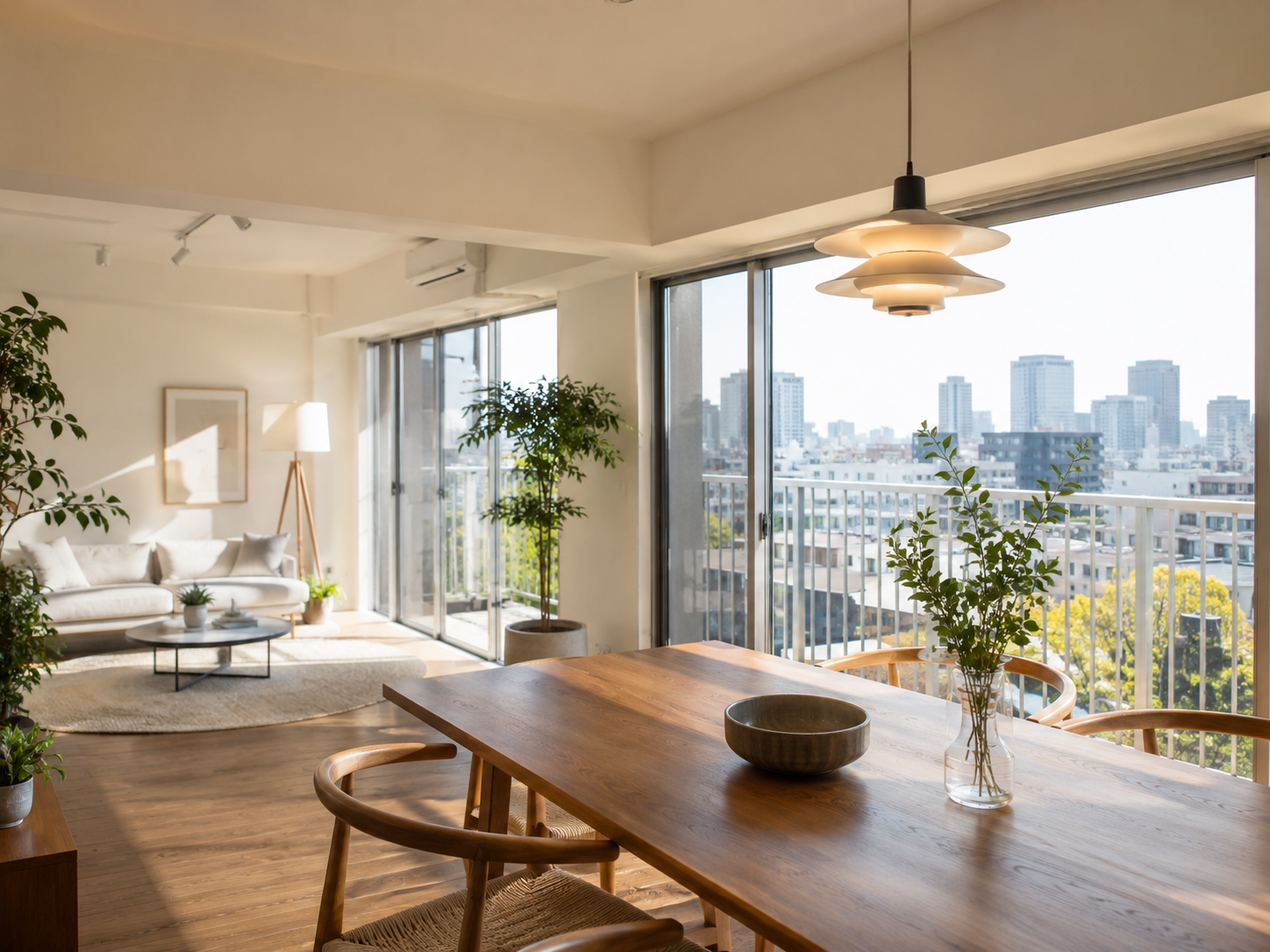
Find the right apartment, understand the building and know what you are buying.
Learn about buying an Apartment →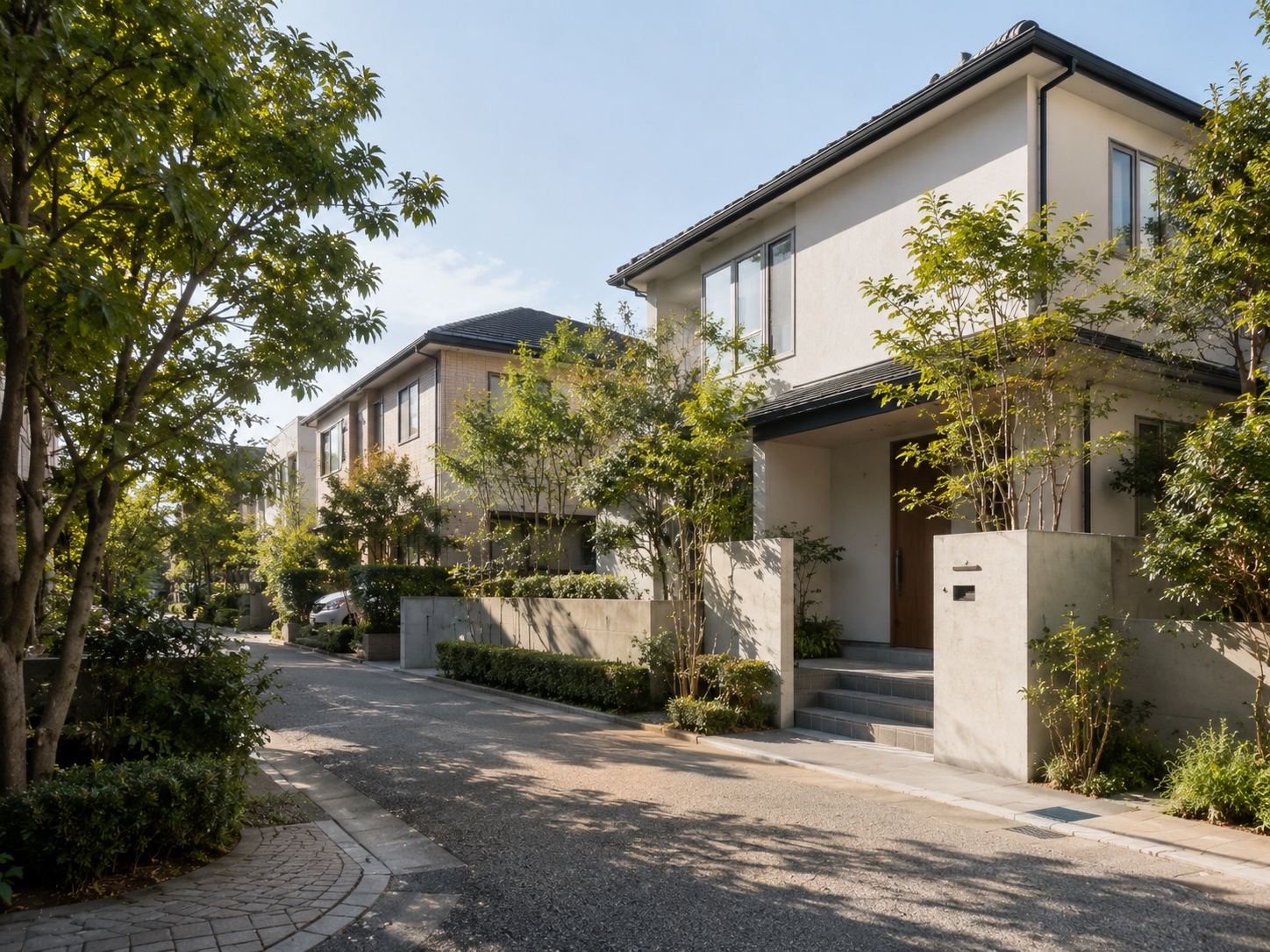
Buy a House
Search Tokyo’s residential neighbourhoods for a home that fits the way you want to live.
Learn about buying a House →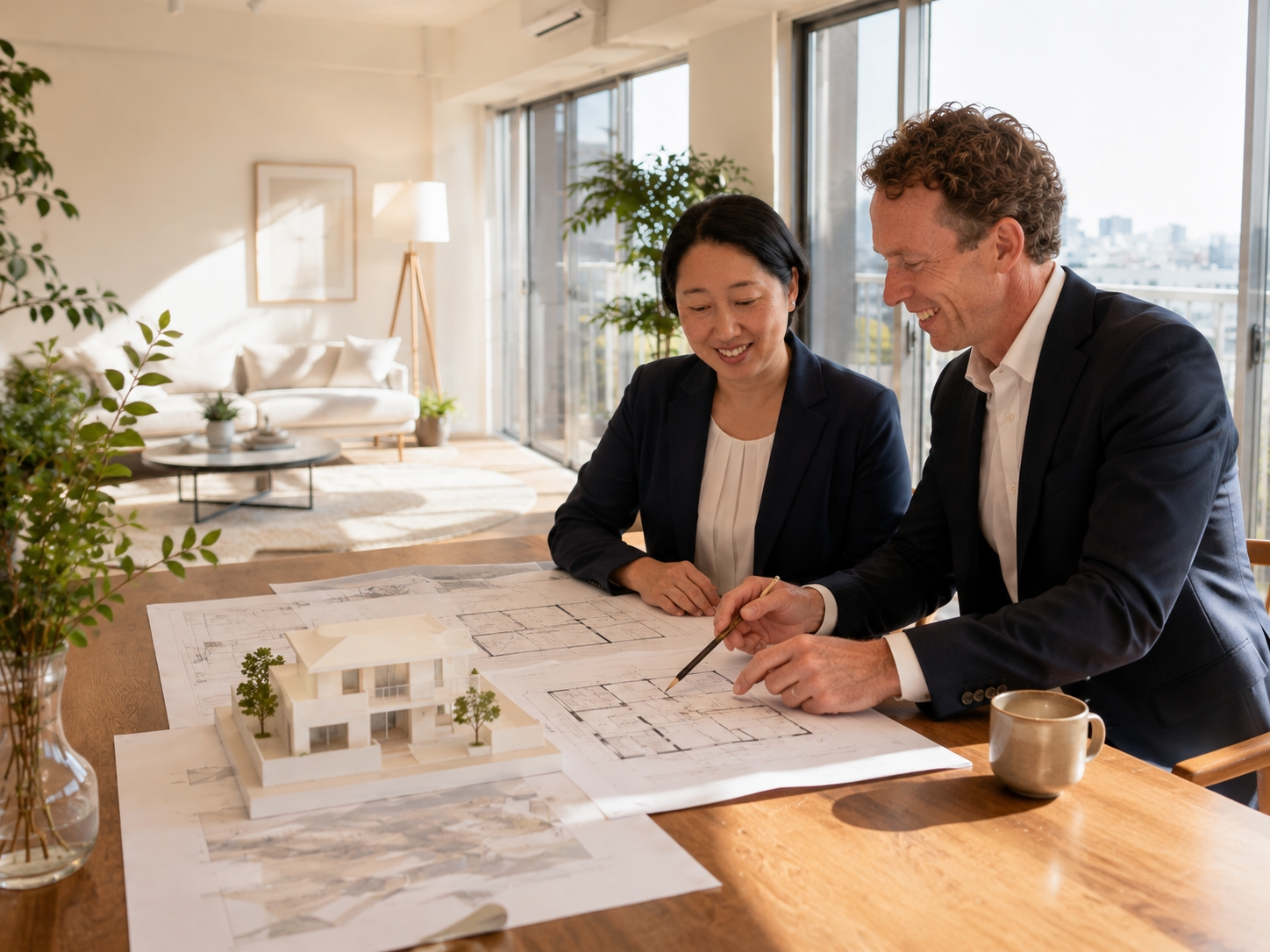
Buy Land + Build
Create the design first, then look for the land where you can afford to build it.
A design that suits you. Learn how to buy land + build →Get expert advice before you start your search.
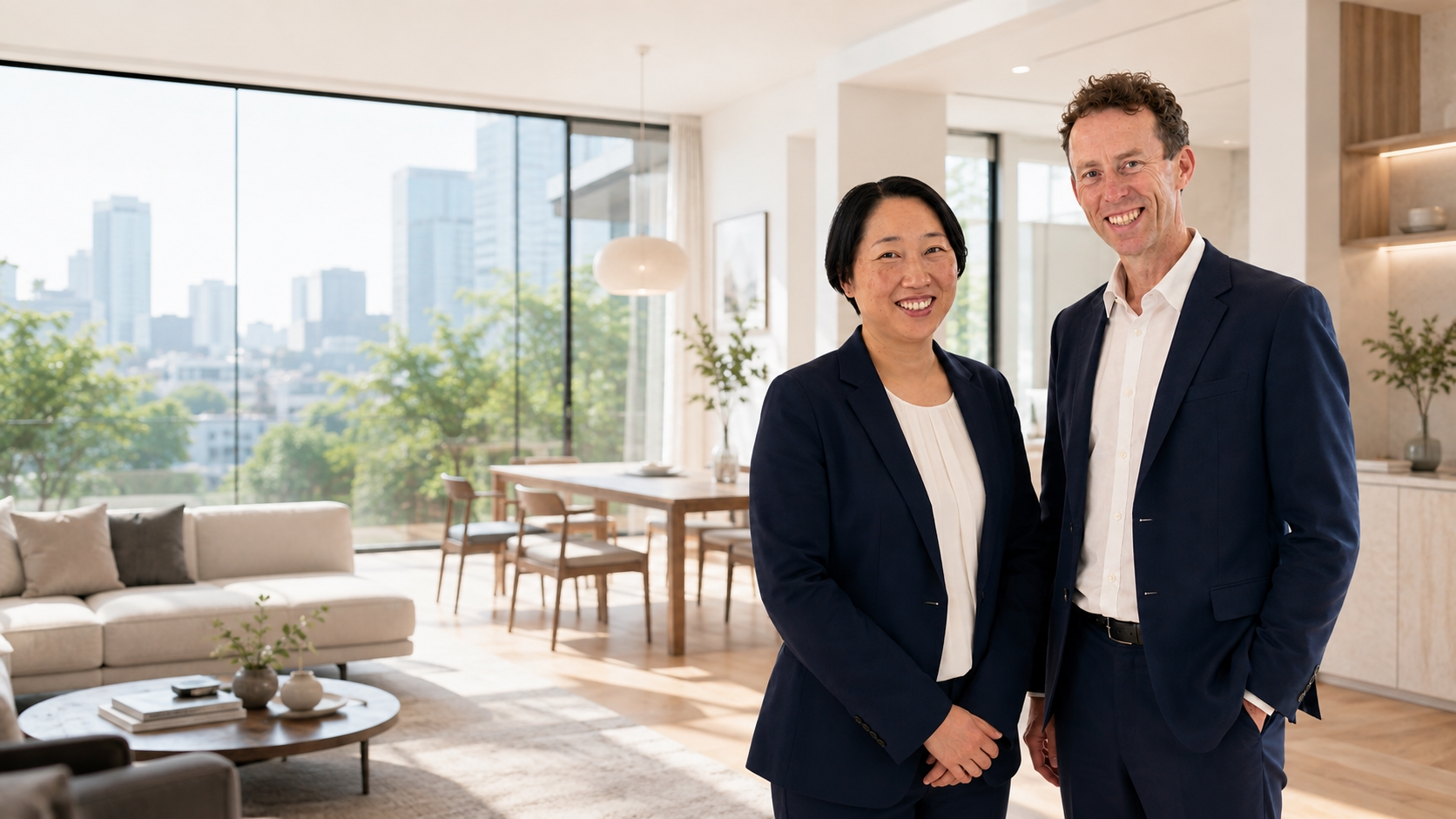
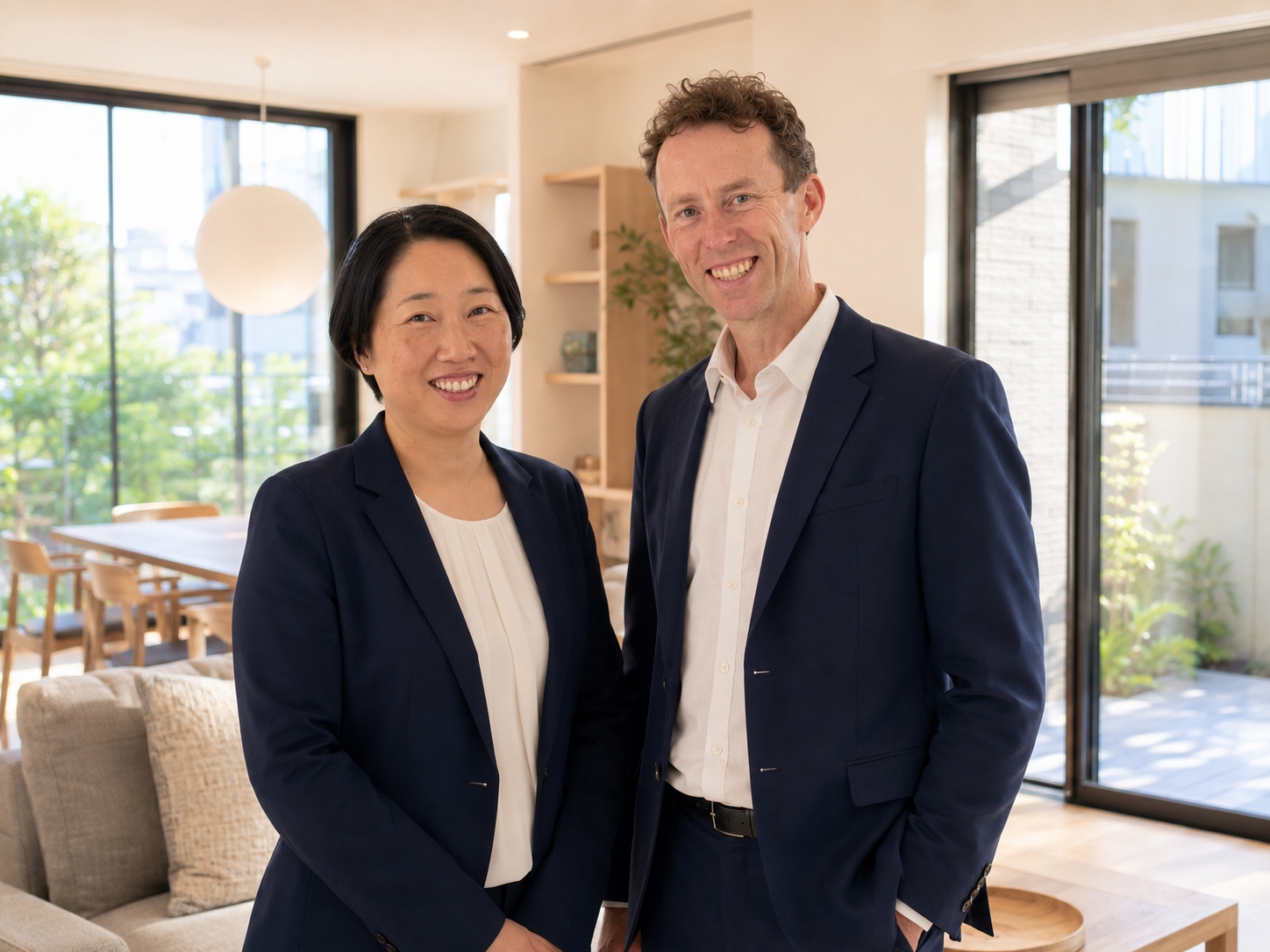
Paul has lived in Japan for over 25 years and is a licensed Japanese real estate professional. Yuuki is Japanese and has lived and worked in Tokyo for more than a decade.
We help you narrow down the areas and properties that best fit your needs, ask the right questions and avoid the common pitfalls of buying real estate in Japan.
Our goal is simple: to help you find a home in Tokyo that genuinely works for you.
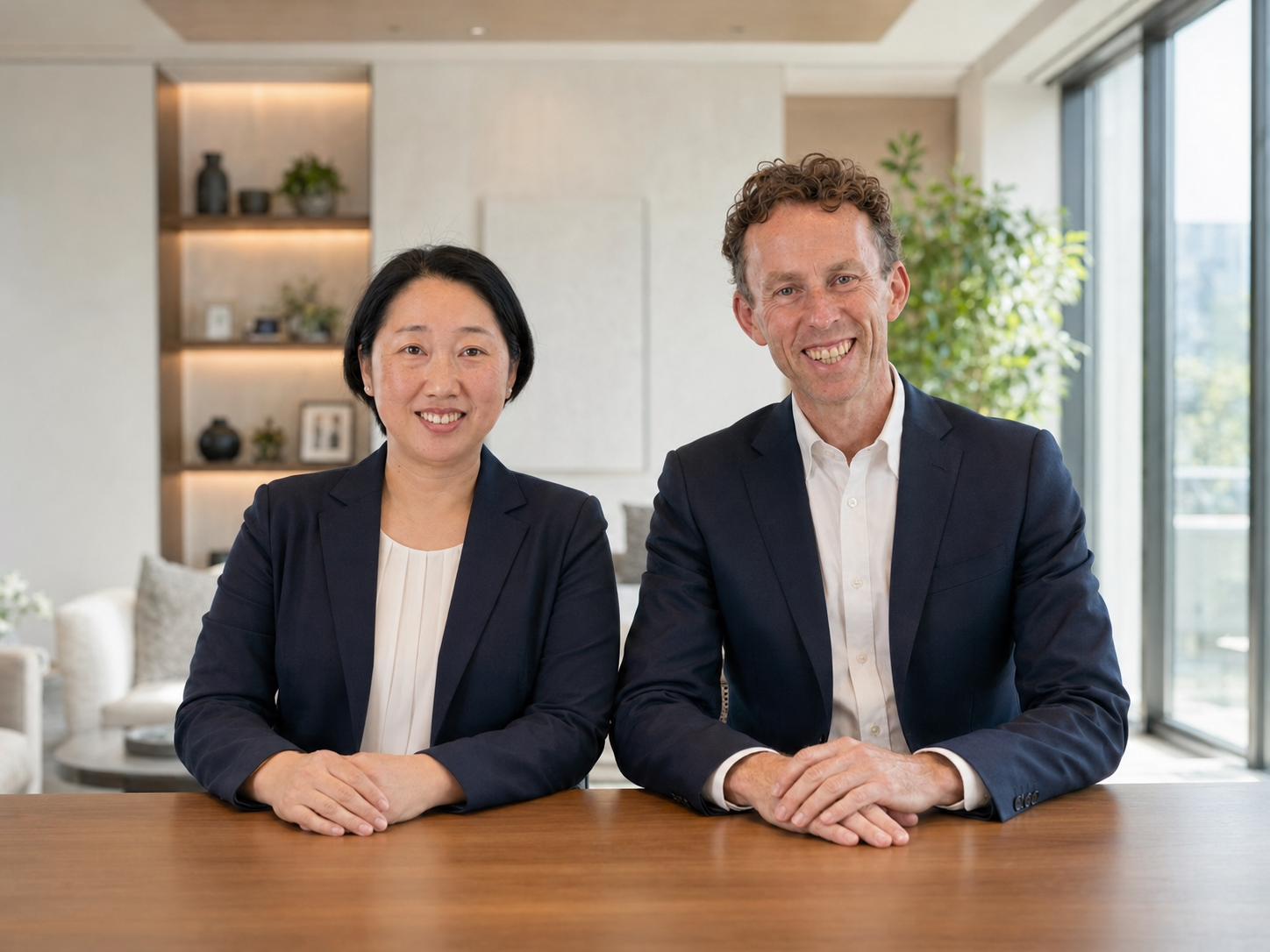
Get expert advice before you start your search.
Avoid the common traps and pitfalls of buying real estate in Japan — and start your search with a much clearer idea of what and where you should be looking for.
Paul has lived in Japan for over 25 years and is a licensed Japanese real estate professional. Yuuki is Japanese, studied at university in Tokyo and has lived and worked in the city for more than a decade.
We start by listening to what you actually want from your property and from your time in Tokyo. Then we help you work out which parts of the city are most likely to give you the lifestyle you are looking for.
Perhaps you want a good school within walking distance of home.
Perhaps you need somewhere comfortable for family to stay when they visit Tokyo.
Or you may want to be close to the university your son, daughter or grandchild will be attending.
Through ongoing discussions, Paul and Yuuki help you narrow down the areas and properties that make the most sense for you. Yuuki handles the Japanese side of the transaction — communicating naturally with the many parties involved, asking the questions that need to be asked and making sure your own questions are properly answered.
Our aim is simple: to help you find a home that makes your time in Tokyo better — somewhere you can enjoy everyday life with your family and friends, while owning a useful long-term asset in Japan.
Your success is our success, and we want you to be genuinely happy with the home you buy.
10 things international buyers should know.
A quick guide to ownership, taxes, fees, selling, renting and buying property from overseas.
01 Can foreigners buy property in Japan?
Yes. Foreign individuals can generally buy and own apartments, houses and land in Japan, even if they do not live in Japan.
You do not normally need Japanese citizenship or permanent residency simply to own residential real estate.
02 Do foreigners pay more to buy or own property in Japan?
Generally, no. Foreign ownership does not by itself create a special higher purchase tax or annual property tax.
Buyers normally face the same types of costs such as brokerage fees, registration costs, property acquisition tax and other transaction expenses. After purchase, owners generally pay annual fixed asset tax and, where applicable, city planning tax.
Overseas owners can have some additional administrative requirements, such as arranging tax representation in Japan in certain circumstances, but this is different from paying a special “foreigner tax.”
03 What is the brokerage fee for buying real estate in Japan?
For most residential property purchases above ¥4 million, the standard maximum brokerage fee is calculated as: 3% of the purchase price + ¥60,000, plus 10% consumption tax.
Examples include consumption tax on the brokerage fee.
04 How much capital gains tax do I pay if I sell my property?
Capital gains tax is charged on the taxable profit from the sale — not simply on the total sale price.
For an individual, the rate depends mainly on how long the property has been owned. If the property is classified as a long-term holding, the standard rate is approximately 20.315%, including national income tax, reconstruction surtax and resident tax.
For a short-term holding, the standard combined rate is approximately 39.63%.
The key test is whether the property has been owned for more than five years as of January 1 in the year of sale. Special rules and deductions may apply, particularly for a qualifying main residence.
05 If I buy a property in Japan, do I get a visa?
No. Buying property in Japan does not automatically give you residency, permanent residency or a Japanese visa.
Property ownership and immigration status are separate systems. You can own a property without living in Japan, but you still need an appropriate visa if you want to reside here.
06 If I buy a property, how can I find a tenant?
A local property management or leasing company can advertise the property, arrange viewings, screen prospective tenants, prepare the lease and manage the property after the tenant moves in.
Before purchasing, it is worth checking expected rent, tenant demand, building rules and whether the property is suitable for the type of rental you have in mind.
Long-term residential leasing and short-term accommodation such as Airbnb are very different, and condominium rules or local regulations may restrict short-term rentals.
07 What are the other costs of buying property in Japan?
In addition to the purchase price and brokerage fee, buyers should normally budget for registration costs, judicial scrivener fees, property acquisition tax, fixed-asset tax adjustments, stamp duty where applicable and financing-related costs if using a loan.
As a broad planning figure, total acquisition costs are often around 6–8% of the purchase price, although the actual amount varies considerably depending on the property and financing structure.
08 Do I need a Japanese bank account to buy property?
Not necessarily. It is possible for overseas buyers to purchase Japanese real estate without already having a Japanese bank account.
However, settlement arrangements and international transfers need to be organised carefully in advance, particularly because large property transactions involve several parties and strict settlement timing.
09 Do I need to use a digital contract?
No. A property transaction does not have to use a digital contract.
Japanese real estate transactions can still use traditional paper documents, while electronic documents and electronic contracting are also permitted when the parties agree and the required procedures are followed.
Electronic contracting can be particularly convenient for buyers living overseas. It can also avoid the stamp tax that would otherwise apply to a taxable paper sales contract.
10 What does buyer representation mean in Japan?
The seller normally has a real estate agent handling the sale. A buyer can also appoint their own real estate agent to represent their side of the transaction.
Buyer-side representation means having someone who searches and evaluates properties from your perspective, asks questions of the seller’s agent, reviews information, coordinates the transaction and negotiates when appropriate.
For overseas buyers, it also gives you someone in Japan who can communicate with the various Japanese parties involved while explaining the process to you in English.
Useful reading before you buy.
BUYING AN APARTMENT IN TOKYO.
Apartments are the biggest part of Tokyo’s residential market. There is a huge amount of choice — but you are not just buying the room. You are also buying into the building and land as well.
01Check the building, not just the apartment.
Look at the building’s repair history, long-term repair plan, reserve fund and general condition before moving towards making an offer.
02Understand how much the monthly fees are.
Management fees and repair reserve contributions vary enormously. A low monthly payment is not necessarily good news if the building is simply not putting enough money aside for future work.
03Will you need parking?
A house without parking is difficult to sell - but an apartment is usually close to the station and often in the middle of the city. How often will you use your car - it's worth considering.
04Read the rules before you buy.
Can you keep a dog? Renovate the flooring? Rent the apartment out? Install new windows? Use it as an office? Condominium rules can affect how you actually use the property.
05Check the elevator status.
Older apartments often do not have an elevator -even on the fourth or fifth floor. You probably don't want to be carting your luggage up four flights of stairs
06Think about the building’s future.
Older buildings can be excellent purchases — but rebuilding a condominium is much harder than knocking down your own house. Ask whether the building still looks like somewhere people will want to own 10 or 20 years from now.
07Don’t underestimate location within the building.
Floor, orientation, sunlight, view, noise, elevator access and position relative to rubbish areas, roads or neighbouring buildings can make two apartments in the same building feel completely different.
BUYING A HOUSE IN TOKYO
A house gives you privacy, land and control over what you own. Unlike an apartment, you don’t need to pay management and repair fund fees but unlike an apartment, there is no management association taking care of the building for you.
01Decide how much station distance really matters to you.
A house 8 minutes from the station can cost dramatically more than one 18 or 20 minutes away. Sometimes the extra walk buys you considerably more house. Sometimes it becomes something you regret every morning.
02Check the road before you fall in love with the house.
In Tokyo, the road in front of a property can affect rebuilding, extensions, car access and even the amount of land you can actually use.
03Remember the land usually has the greatest value.
With many Tokyo houses, a large part of the long-term value sits in the land rather than the building. Look at the shape, frontage, orientation, zoning and how useful the site would be if the current house disappeared tomorrow.
04Find out what needs fixing.
There is no repair reserve fund waiting for you. Roof, exterior walls, waterproofing, plumbing, termites, foundations, heating and air-conditioning eventually become your responsibility. A cheap house that needs ¥15 million of work is not necessarily cheaper.
05Check what you can change.
Owning the house gives you much more freedom than an apartment — but not unlimited freedom. Building coverage, floor-area ratio, height restrictions, setbacks and local planning rules still matter if you want to extend or rebuild.
06Think about parking properly.
Free parking is one of the great advantages of a Tokyo house — if the car actually fits. Check the width of the road, entrance, turning space and dimensions rather than assuming “parking available” means parking that works for you.
07Buy the neighbourhood as well as the house.
Walk around. Where is the supermarket? How does the route to the station feel at night? Is the street busy? Is there a steep hill? Where is the nearest park?
You can renovate a kitchen. You cannot renovate the neighbourhood.
BUYING LAND + BUILDING IN TOKYO
If you want a house that really suits you, building can be the best option. But start with the house — not the land.
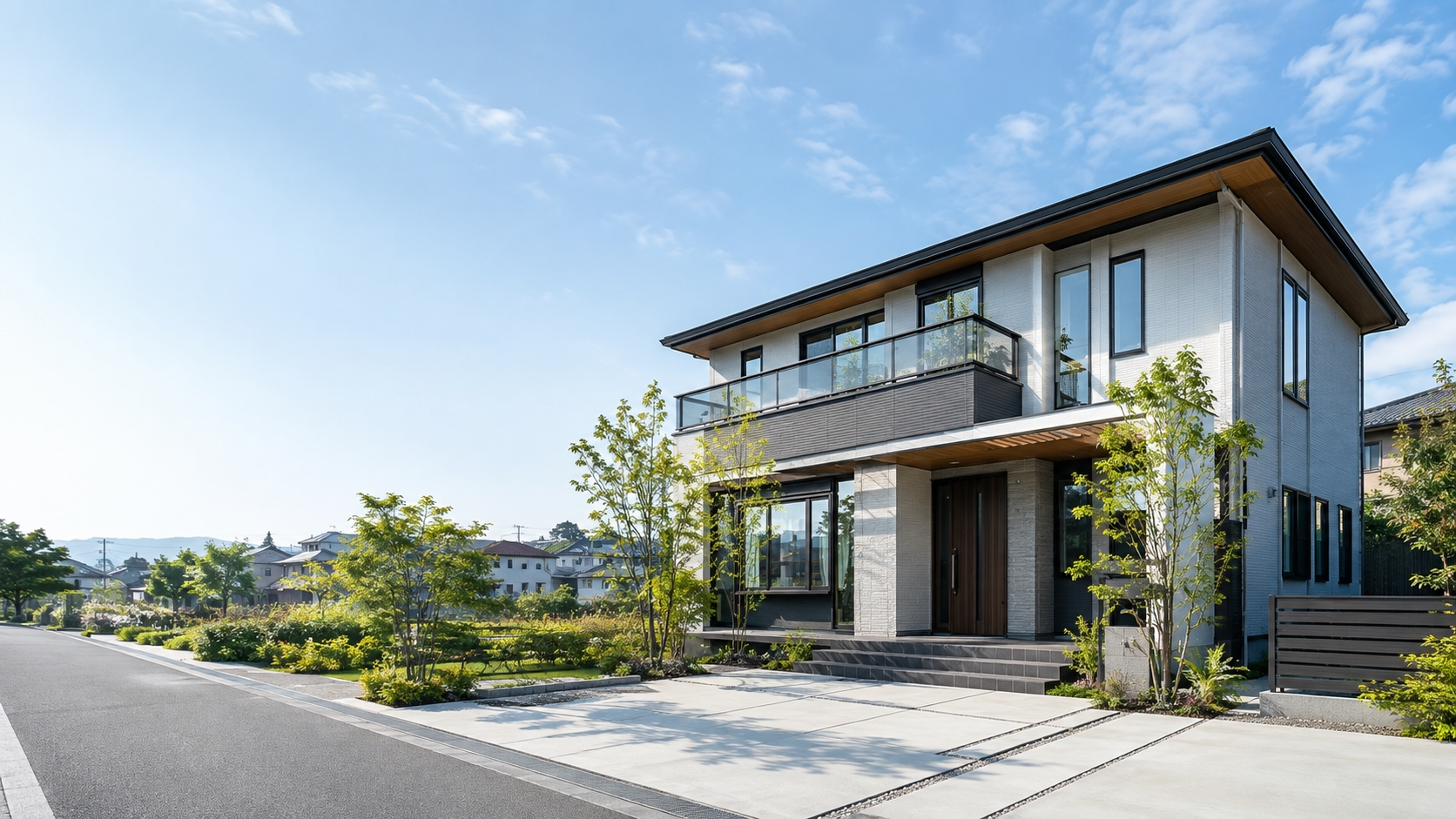
01Work out what you want to build first.
Bedrooms, kitchen size, storage, parking, home office, garden, insulation, bathrooms — get the basic design onto paper before seriously searching for land. Otherwise you are trying to fit your life into whatever plot happens to come along.
02Work out the building budget before the land budget.
If your total budget is ¥120 million and the house you want will cost ¥55 million, you do not have ¥65 million to spend on land. There are a range of costs - not to mention the furniture for the new house..
03There are very few perfect plots.
Much of the easy land in Tokyo was built on a long time ago. Many of the cheapest plots being sold are irregular, sloped, flag-shaped (poor road frontage) or left over from earlier subdivisions. That is why many Japanese people choose to buy an old house, knock it down and start afresh.
04Road access can make or break the site.
A plot may look large enough but still have access or setback issues that reduce what can actually be built. Check the road classification and frontage before getting serious.
05FAR and building coverage do not tell the whole story.
A plot might say 60% building coverage and 200% floor-area ratio, but height limits, road-width restrictions, setbacks and shadow regulations can reduce the usable volume considerably. The question is not simply “What is the FAR?” It is “Can we build our house here?”
06Get your builder involved early.
Your agent can find and check land. Your architect or homebuilder knows whether the design actually works on that land and what it is likely to cost. The best searches happen when those conversations start before the right plot appears.
07Be ready when the right land appears.
Good plots can move quickly. If you already know the house you want, your building budget and the areas you are prepared to consider, you can evaluate a new piece of land much faster when it comes onto the market.
Doing it the other way around — buying the land first and figuring everything else out afterwards — can turn into an expensive exercise in compromise.
Done properly, you get something an existing house often cannot give you: a design that suits you.
Contact Paul & Yuuki
Select the things that matter most to you, and we’ll help narrow down the parts of Tokyo that may suit your lifestyle.
The key to choosing good representation.
01Make sure your agent is really a team.
Ideally, you want one person who can understand all your requirements and explain everything clearly in English, and another who can deal naturally in Japanese with seller agents, management companies, judicial scriveners, banks, renovation companies, builders and everyone else involved in the purchase.
Buying in Tokyo means dealing with a lot of different people over a transaction that might take several months. You want an agent who can build good relationships with all the parties involved and keep everybody working towards the best possible result for you and your family.
02Make sure there is a licensed real estate professional on the team.
At least one person should be a licensed real estate professional (Takken-shi) who understands Japanese real estate law, contracts, disclosures and what needs checking before you buy.
If you want someone who really understands Japanese real estate law and the complexities of buying or selling a property in Tokyo, having a licensed Takken-shi on your team is essential.
03Make sure they are backed by a proper Japanese real estate company.
Your agents should be working through an established, licensed real estate company with the systems needed to handle your purchase properly — including a Japanese bank account that can receive funds from overseas when necessary.
That matters when deposits, settlement money and other payments need to move between countries.
04Make sure they work when you need them.
If you are buying from overseas, your schedule is unlikely to line up neatly with 9:00–5:00 in Japan.
You may be looking at properties after work, asking questions late at night your time, or trying to make a decision before another buyer moves. You want an agent who understands that and can respond promptly when it matters — not someone whose availability ends with normal Japanese office hours.
05Make sure someone is actually representing you.
In Japan, the seller has an agent representing the seller. It makes sense for you to have somebody representing you too — especially when the brokerage fee is the same whether you bring your own agent or not.
You want someone on your side who has your back: someone who will ask the awkward questions, check the details from your point of view and negotiate for you when necessary.
Just as importantly, you want an agent who knows when to push and when not to. There is little point winning a minor concession if you end up losing the property you really wanted.